In Conversation with…Dr Rachel Price
Dolen Cymru-Lesotho’s Health Chair, Aaron Pritchard in conversation with GP Registrar, Rachel Price.
Dr Rachel Price is a GP Registrar in South Wales and visited Lesotho in 2025 having heard through HEIW about a new Global Health partnership offering the chance to travel to Lesotho and experience family medicine in Leribe District.
Firstly, thank you very much, Rachel for taking time to share your experience with Dolen Cymru-Lesotho.
Could you please start by telling us a little bit about your current role and work as a GP registrar in South Wales?
Rachel: I am currently in my final year of GP training and truly enjoy working in the rural community where I am based. I feel fortunate to be part of a fantastic and supportive team. Every day is varied and full of surprises, which is what keeps me interested in general practice.
How did you first come to learn about the link between Wales and Lesotho and the opportunity to take part in the Leribe Family Medicine Programme?
Rachel: Growing up in Wales, I had always been aware of Dolen Cymru and the special link between Wales and Lesotho, but it was something I had never really explored in depth. When I started GP training, I assumed that any opportunities to travel or work overseas would have to wait until after I had completed my training. I couldn’t have been more wrong. In my second year of training, we received an email from HEIW about a new Global Health partnership offering the chance to travel to Lesotho and experience family medicine and healthcare in a very different setting. The opportunity immediately resonated with me, and I knew it was something I had to apply for.
Could you tell us a little bit about the Leribe Family Medicine training programme and what your visit involved?
Rachel: The Leribe Family Medicine training programme is run by the Lesotho Boston Health Alliance (LeBoHA). Lesotho does not have its own medical school, so many talented Basotho students leave the country to study medicine abroad and often do not return. Those who do return frequently face challenging working conditions, including placements in remote mountainous areas, responsibility for a broad range of complex clinical problems with limited support, professional isolation, poorly resourced hospitals, low salaries, and few opportunities for career development. LeBoHA was established to address these challenges by strengthening health professional education and development, with a particular focus on delivering holistic care in district hospitals and primary healthcare settings.
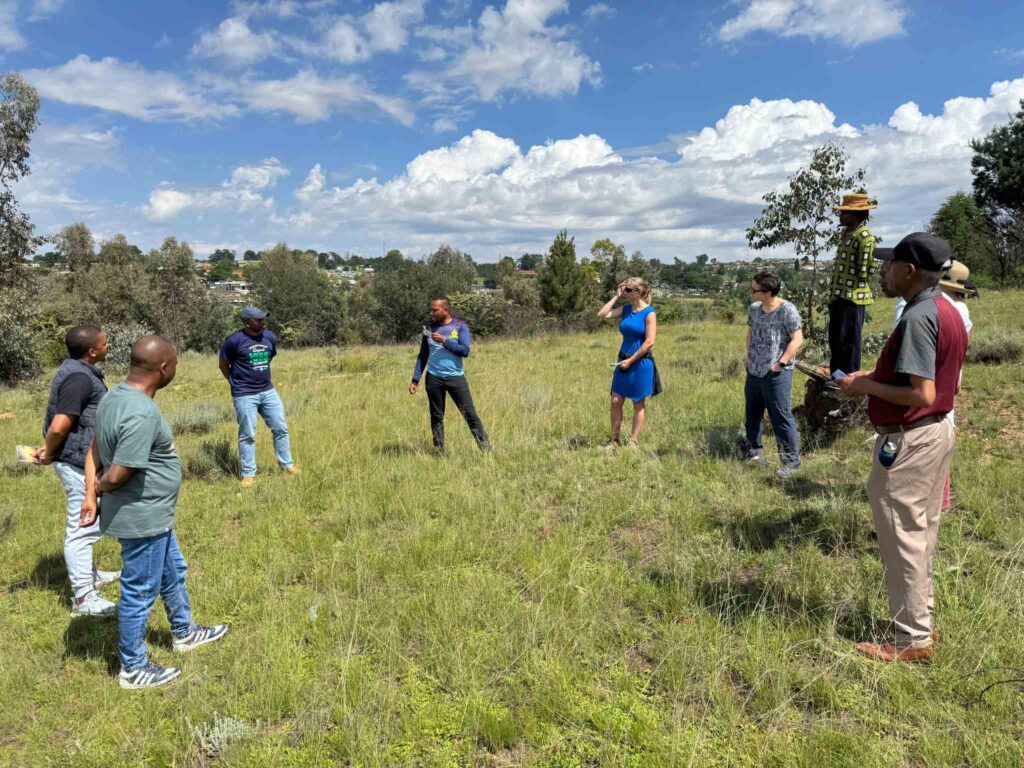
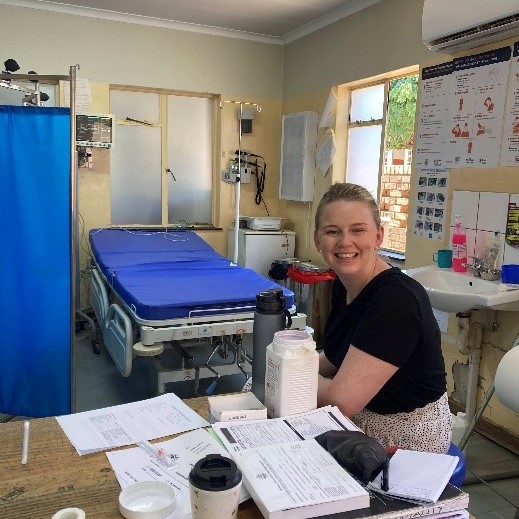
During our visit, we were based at one of the district hospitals, where we shadowed doctors on the Family Medicine training programme as well as clinicians from other specialties across the hospital. This gave us valuable insight into how care is delivered in a low resource setting, and the breadth of practice and skills required of family physicians in Lesotho. We were fortunate to attend one of the programme’s teaching weeks, which focused on HIV and tuberculosis and was both highly educational and fascinating. We also spent time at the LeBoHA-run Centre of Excellence, which is set up similarly to a GP practice, with a strong emphasis on long-term chronic disease management and holistic patient care. In addition, we were able to join several community outreach projects, gaining further insight into healthcare delivery beyond the hospital setting. During our time there, we also completed a small quality improvement project to help update the hospital admission proformas.
What do you feel you have most learnt from working with the Family Medicine Training programme in Leribe and that you think Primary Care providers in Wales could learn from, especially?
Rachel: Working alongside the doctors in Leribe was a deeply formative experience. Witnessing the adaptability and resourcefulness of doctors providing care in challenging conditions gave me a newfound perspective on my colleagues in Wales. Many of them trained in low-to-middle-resource settings outside of the UK, and since returning I’ve valued the chance to hear about their diverse professional journeys. It’s clear we often under-appreciate the unique skill sets and resilience these clinicians bring to our healthcare system.
The experience also prompted reflection on my own practice within the NHS. In Wales, we are fortunate to have ready access to investigations, and I became more aware of how easily we can over-rely on these resources and how wasteful we can sometimes be. In contrast, clinicians in Leribe depend heavily on strong clinical skills and careful decision-making to provide care within significant resource limitations.
The most significant impact on my practice however relates to a profound shift in how I view preventative health. Observing the high prevalence of late-stage cervical cancer in Lesotho, a direct result of the lack of a national screening and vaccination programmes and high HIV rates, was a stark lesson in the value of early intervention. Seeing the devastating human cost of cases diagnosed at an incurable stage served as a sobering reminder of what is at stake. This experience has transformed my view of screening from a routine administrative task into a vital clinical priority; I return to Wales with a renewed commitment to promoting these services, having seen firsthand the reality of life without them.
How do you see your role with the Lesotho Link evolving in the future?
Rachel: I see my role with the Lesotho Link as an ongoing and evolving commitment rather than a one-off experience. Having benefited so much personally and professionally from the partnership, I am keen to remain engaged in a way that is sustainable alongside my clinical career in Wales. At present this may involve supporting future trainees who are interested in the programme and sharing learning from the Leribe Family Medicine Training Programme within my training scheme and with others.
As I progress in my career, I would hope to remain involved with the Lesotho Link through continued collaboration, advocacy for global health partnerships, and, if possible, future visits that support sustainability rather than short-term clinical input. Above all, I see my role as helping to strengthen a mutually beneficial relationship, ensuring that learning flows in both directions and continues for many years to come.
Is there one particular memory from your visit that has stayed with you most strongly and you would be happy to share?
Rachel: While I have so many wonderful memories, one moment in Leribe stands out. Jenna and I were simply walking down the street when two young schoolchildren waved and greeted us with a cheerful ‘Shwmae!’ It was a small gesture, but to hear a Welsh greeting so far from home really brings to life the strength of the bond between Wales and Lesotho.
Thank you for your time, Rachel and looking forward to your ongoing involvement with and support of the health partnerships between Wales and Lesotho.