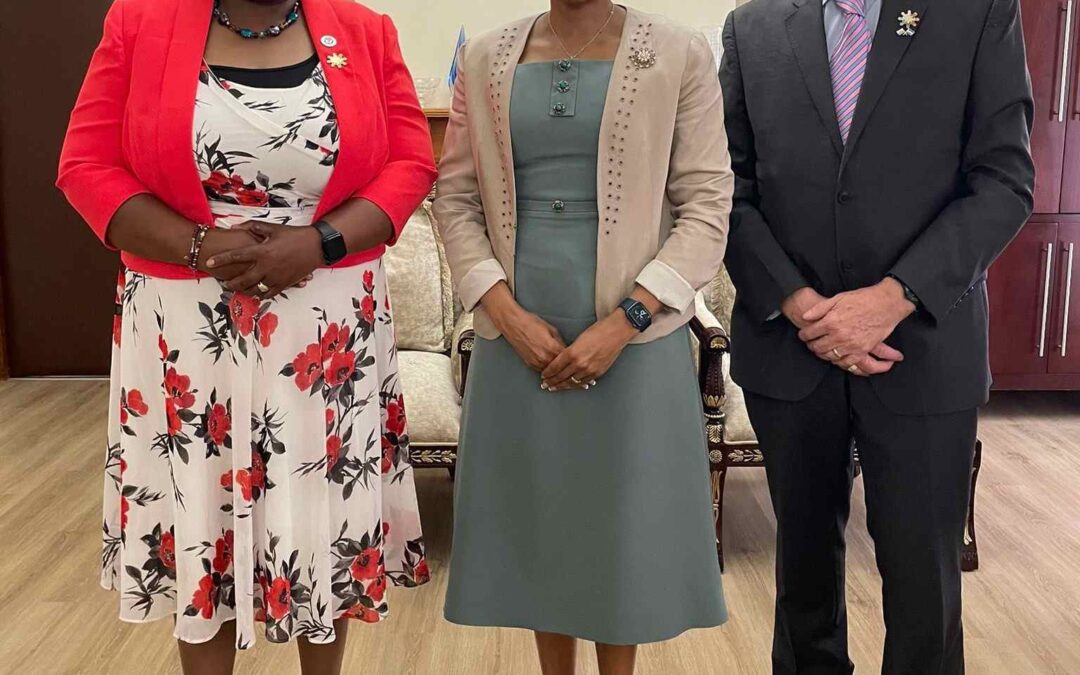
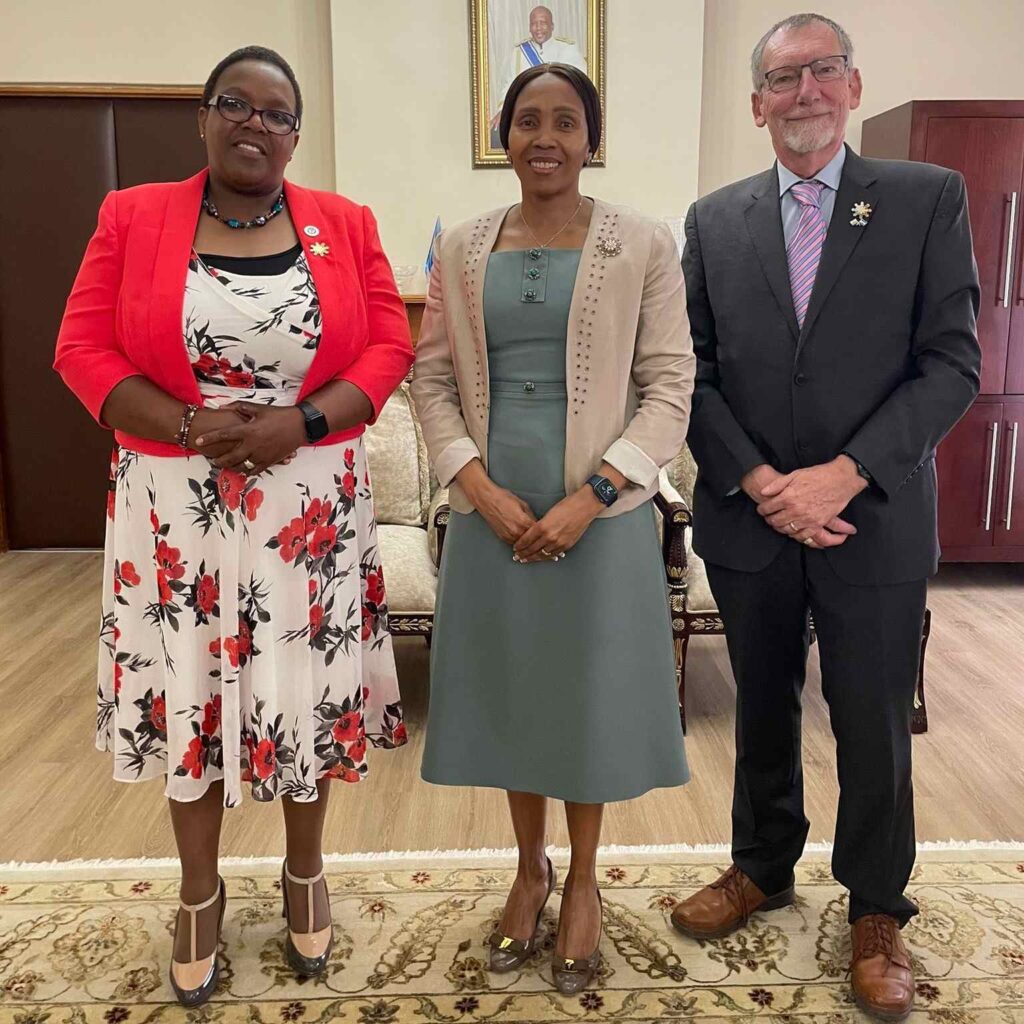
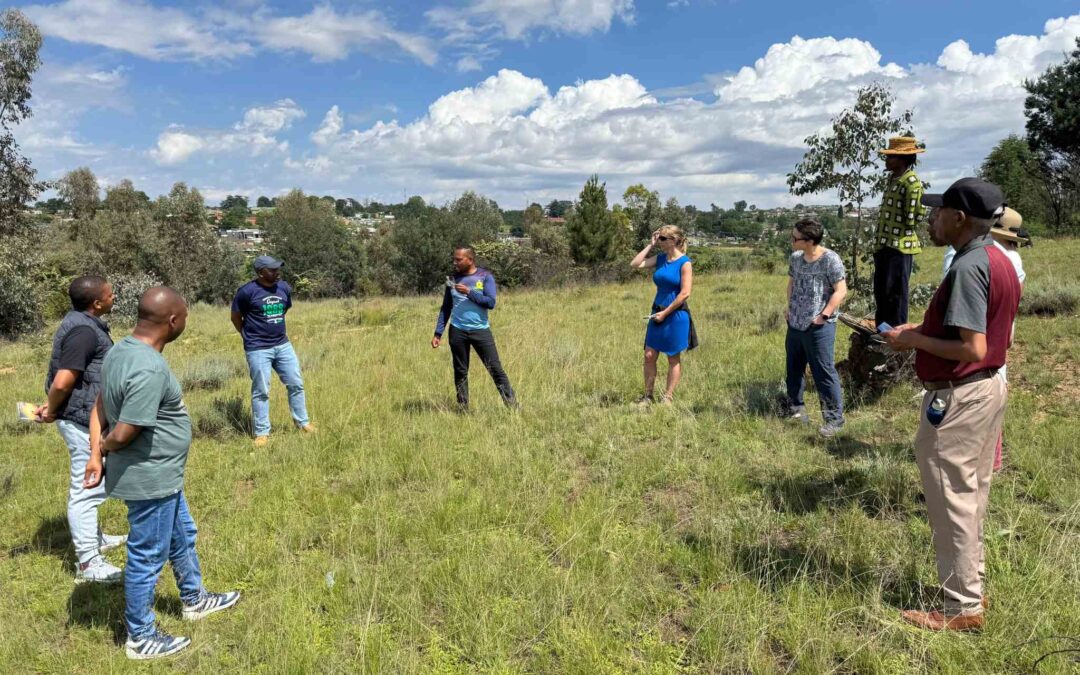
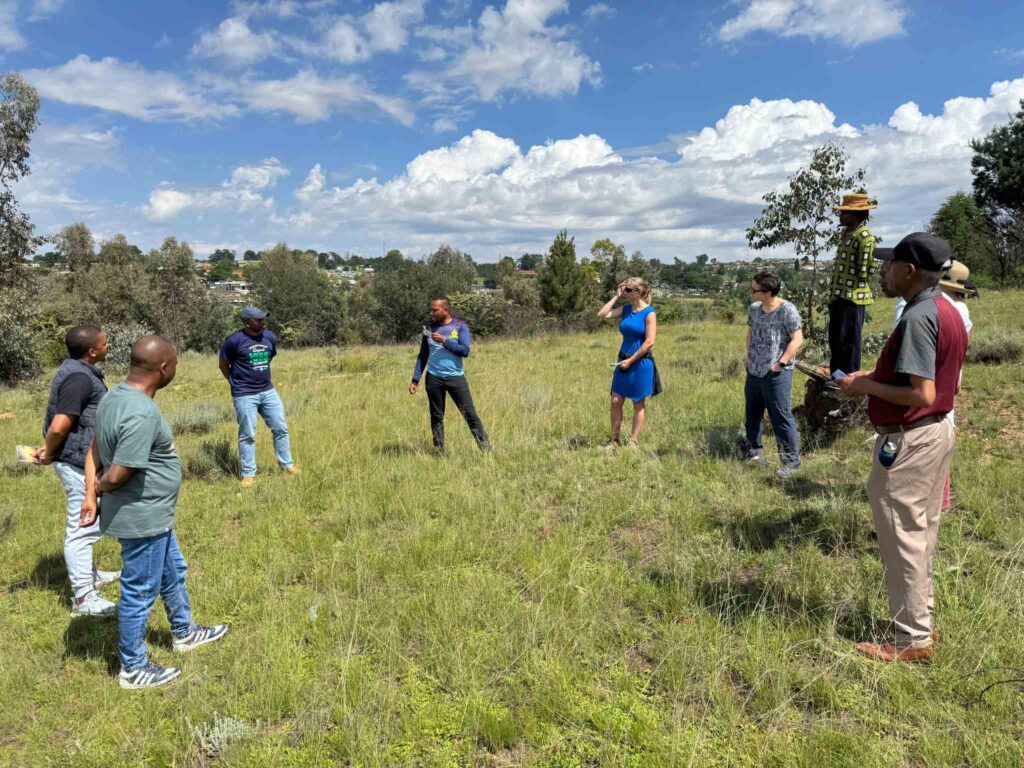
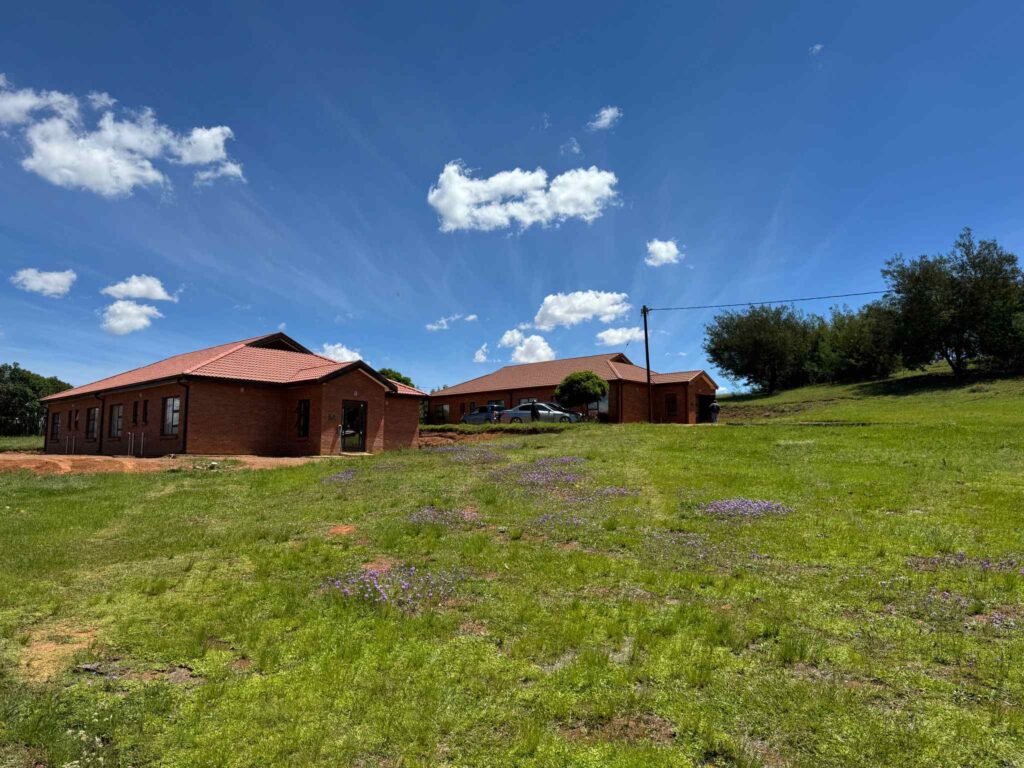
I recently spent two weeks in Maseru to see the progress made on the Starlight Oasis of Hope Hospice (SOHH)Palliative Care Centre building and seeking further funding. the building itself is complete and we were able to host a thank you lunch for the labouring team who have worked hard on the construction over the last eight months. A week later our principal sponsor the Standard Lesotho Bank put on a lunch meeting for our corporate sponsors in the large room which will be our Day room which looks out across fields to the mountains beyond. They were pleased with what they saw and we encouraged them strongly to continue their support as we complete essential groundwork and plan for the therapy and inpatient phase. In between we received a private visit from HM Queen Masenate Mohato who was also impressed. Mme Malichaba Tebello, our Founder and I had previously had a private audience over a cup of coffee with Her Majesty at the Palace.
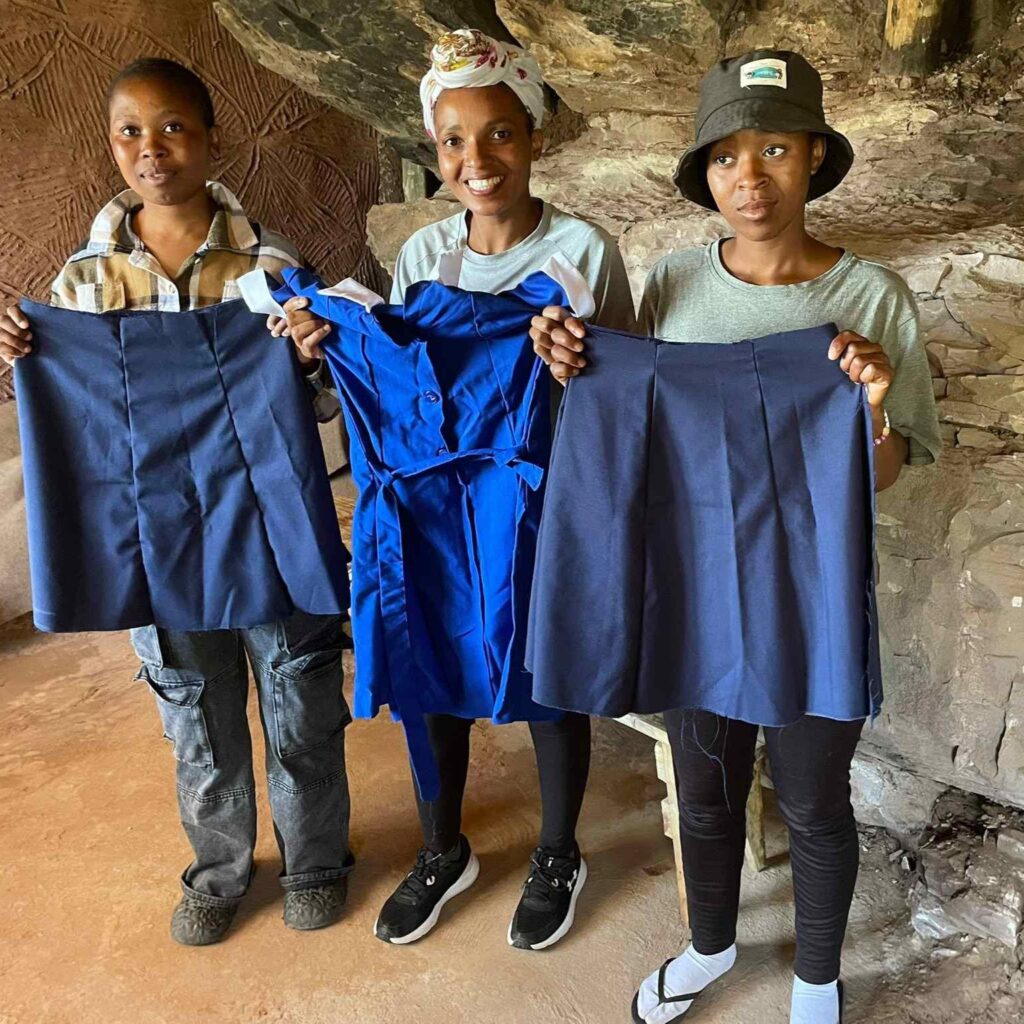
I later met with HRH Prince Seisso , our Dolen patron, at his office in the royal village at Matsieng to discuss how he can support Dolen’s activities in Lesotho and Wales. I also visited the amazing Amelia Senekane and Heal Our Land Organisation (HOLO). I saw their sewing ladies in action making uniforms for schools and the children’s morning Assembly with an award given out for the winner of a national table tennis competition.
Otherwise it was a busy round of meetings with other stakeholders and catchups with BoNtate Manyanye and Khosi in the Dolen Office and a visit to Lesotho Hospital Alliance (LEBOHA) to celebrate 10 years of our link with the Family Medicine Training Programme and discuss future collaborative projects.
Between 17th and 21st November, consultant psychiatrist Dr Robynne Wadsworth and retired GP Dr Ian Happs coordinated a week-long programme of education on mental health for registrars at the Family Medicine Speciality Training Programme in Hlotse, Leribe. They worked at the fantastic new LeBoHA education centre, joined remotely by 6 colleagues across Wales who presented by video link.
The FMSTP course now leads to the qualification of Master of Medicine in Family Medicine, and the content of the presentations had to reflect the higher level of attainment required. Unlike in previous years, the technology worked well and without interruption, thanks to kind weather and a new ‘Starlink’ satellite internet service. The sessions were all very interactive and there were some excellent discussions and debates. The formal and informal feedback was very positive, with lovely comments from the learners and the faculty members.
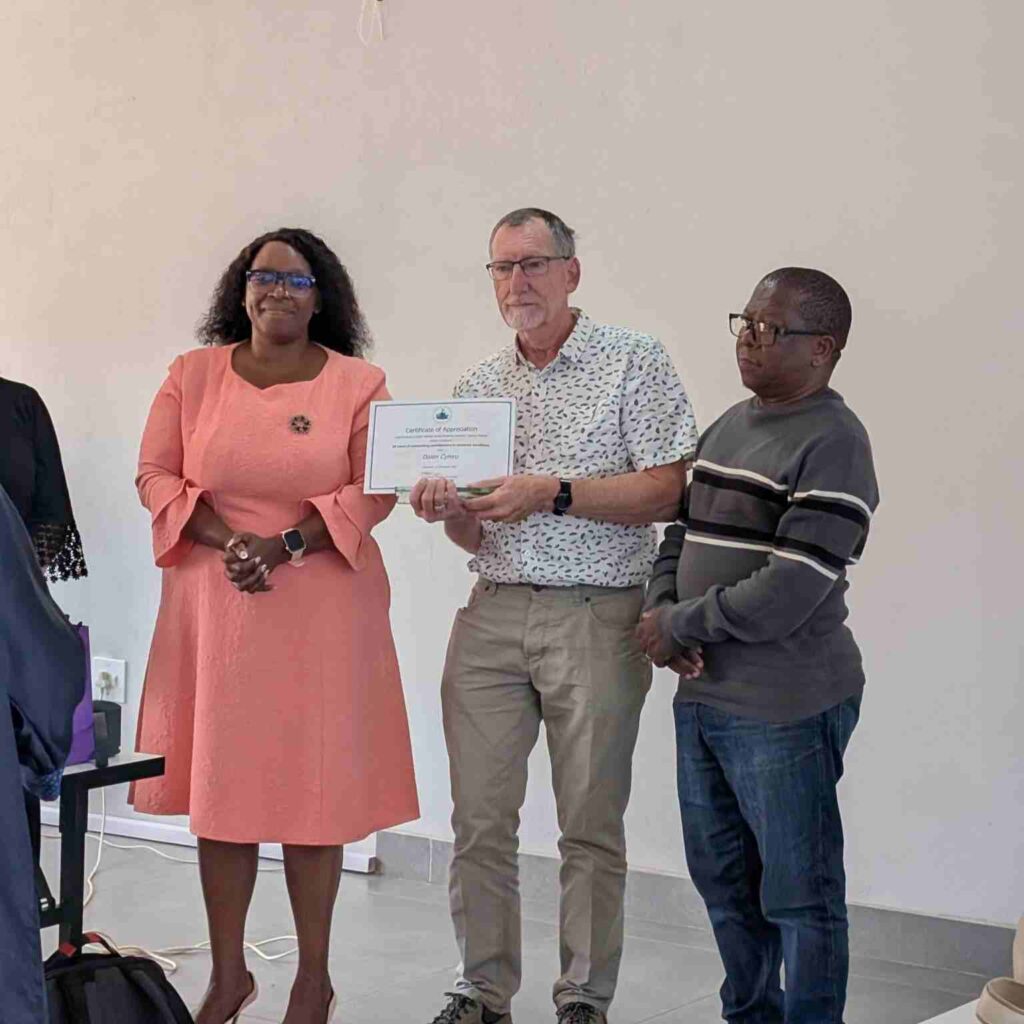
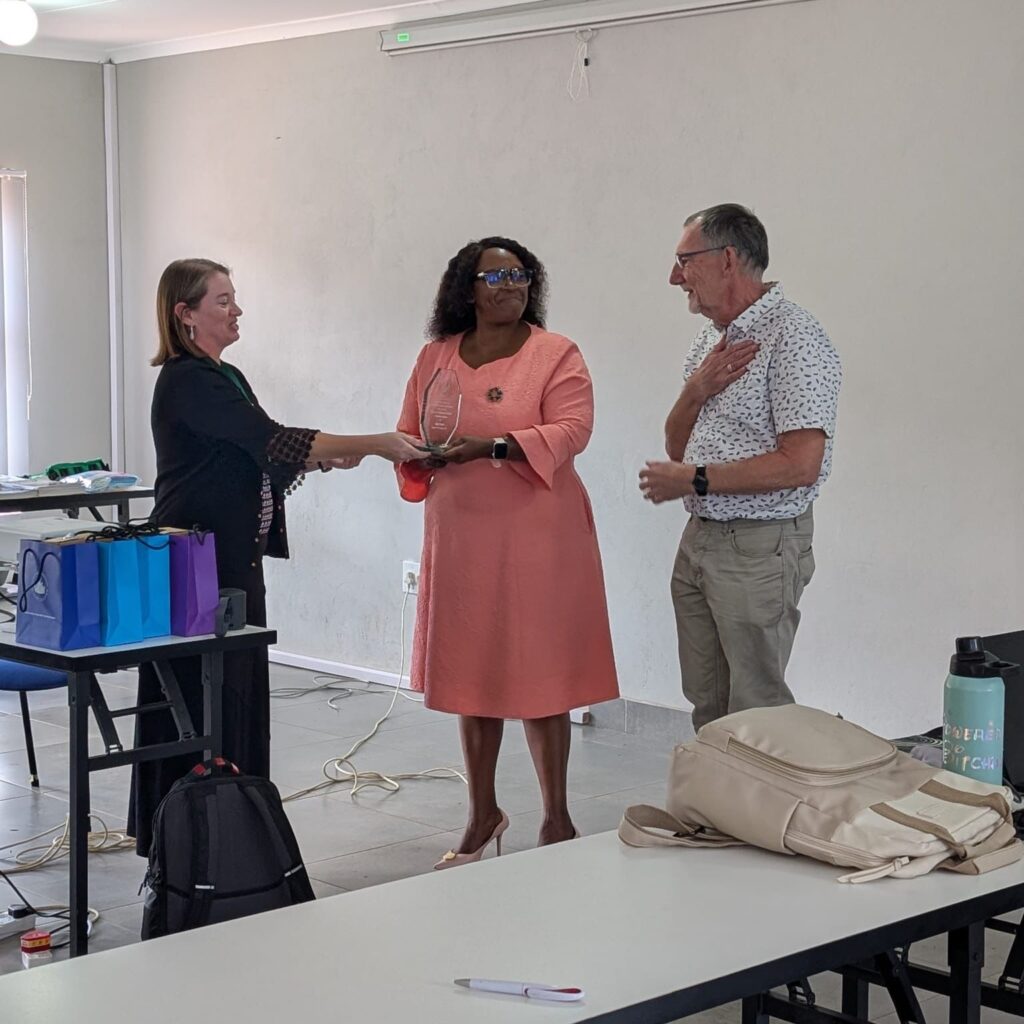
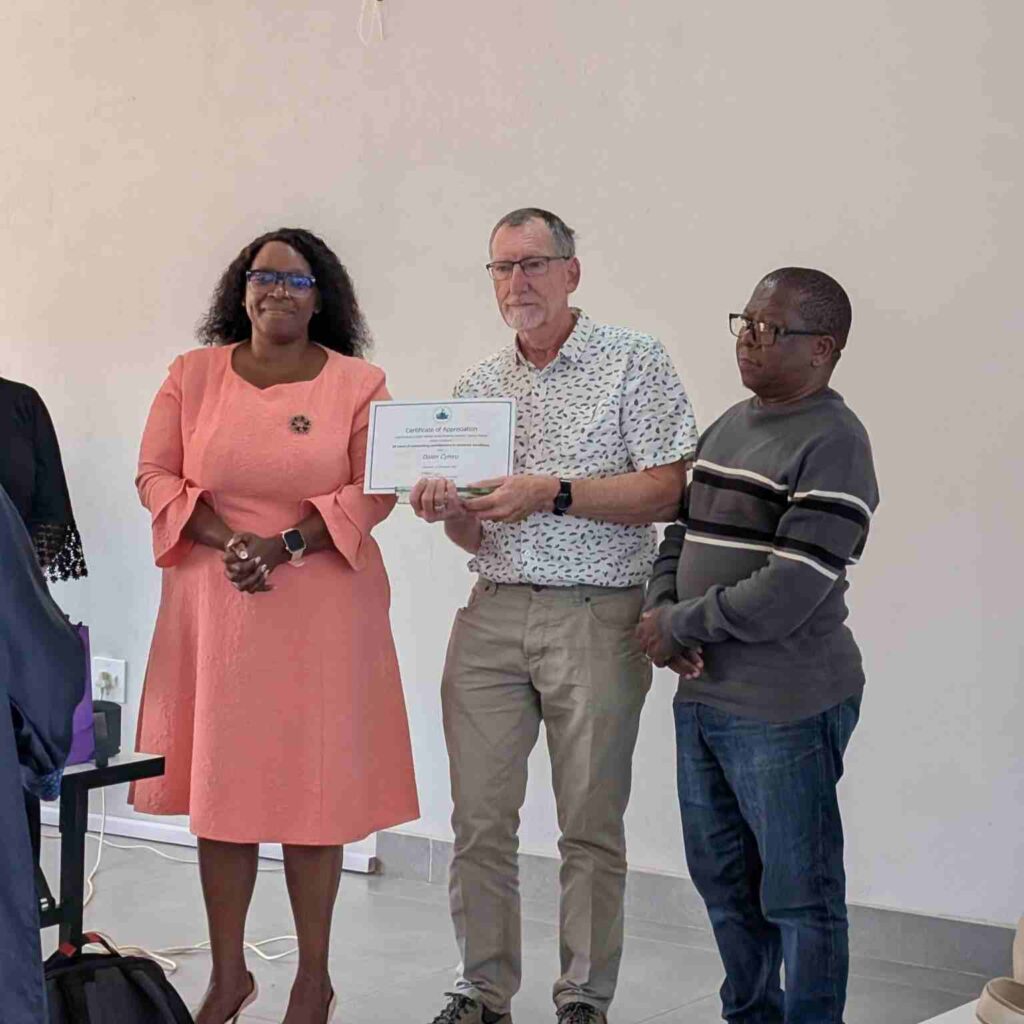
The week of teaching marked 10 years of support for the FMSTP from colleagues in Wales. Vice President of Dolen Cymru Lesotho Dr Paul Myres initiated that link in 2015 and he joined the team on the first day of the mental health course on 17th November. The staff and faculty from LeBoHA arranged a celebration of the anniversary and Executive Director Dr Elizabeth Nkabane-Nkholongo presented Dr Myres with a glass plaque and a Certificate of Thanks.
On arrival in Lesotho, the visitors were invited to meet Dr Thabo Mokhothu, the Director of Mental Health and Dr Hlophekile Tsita, the Superintendent of Mohlomi Hospital. A follow up meeting at Mohlomi Hospital at the end of the week allowed further discussion of needs and the kind of support which would be welcomed. Further work is on-going, and will be reported in due course.
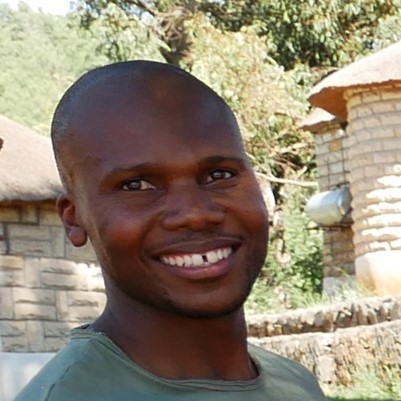
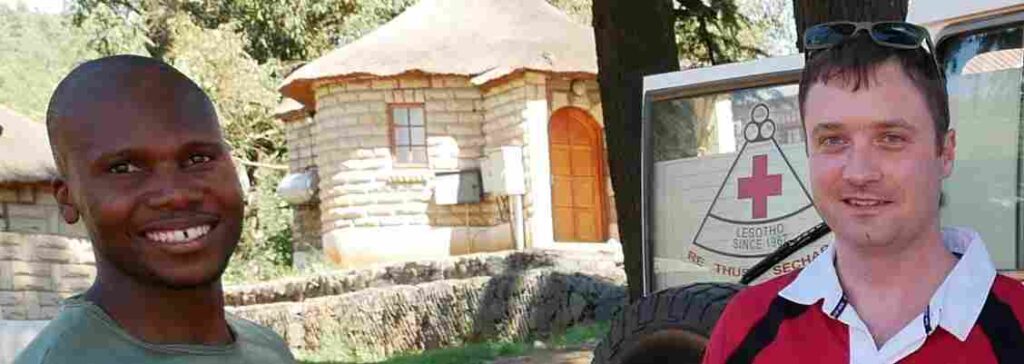
Dolen Cymru-Lesotho’s Health Chair, Aaron in conversation with Moeketsi Lethoko of Lesotho Red Cross.
Moeketsi is an active and longstanding member of the Lesotho Red Cross and is formerly LRCS’s Master Trainer in First Aid. In 2019 he worked with health partners from Wales on the Moyeni Responders project in Quthing and has since worked with Dolen, leading the training of remote responders in Thaba Tseka district and becoming a Master Trainer in Mental Health First Aid.
Thank you so much Moeketsi for taking the time to chat about your role and experience working alongside Dolen Cymru-Lesotho/Wales-Lesotho Link…
May I start by asking you how you first became involved with the Lesotho Red Cross?
Moeketsi:I first got involved with Lesotho Red Cross as a youth member mainly with the interest of sensitizing youths in the communities about HIV prevention and home-based care. Also portraying the messages that had helped to fight stigma and misconceptions around HIV through theatre.
What aspects of your roles with the Red Cross have you found to be the most rewarding?
Moeketsi:Having been playing a bigger share as forefront activist, I was able get a vast experience and series of leadership skills where I found myself leading a team of Lesotho Red Cross youth in representing the National Society at a Southern African Red Societies consultative meeting that was held in Johannesburg in 2007. Here the different approaches used to combat HIV/AIDS were documented to strengthen the fight against HIV/AIDS in Southern Africa.
I further got exposure in disaster management activities such as responding to wind-storms and relief activities like food distribution, gardening and crop production for vulnerable communities.
People often think of the Red Cross’ work in teaching and training life-saving skills, but a lot of your work has also concentrated on injury and illness prevention. Can you tell us a bit more about this preventative focus?
Moeketsi:Prevention earns quite a bigger share in the disaster management cycle and is key in preparedness; when people are prepared, they are able to avoid danger since their behaviour and attitude attributed by the knowledge the have enable them to tackle problems at developing stage. For instance, if you train a person swimming and water safety you have ultimately contributed to preventing death that could happen through drowning. Also, if you teach people about the types of injuries and illnesses, how the occur, that also contributes in preventing their occurrence in future because you activate the prevention sensitivity behaviour.
When did you first work alongside Dolen Cymru-Lesotho?
Moeketsi:I worked with Dolen Cymru-Lesotho in 2019 at Quthing where we were training two groups of people being, Village Health Workers and the other one was ambulance drivers from Quthing hospital, traffic police, correctional officers and a Lesotho Red Cross driver on medical first response and enhanced first aid.
Do you think partnerships, like those facilitated through Dolen can help strengthen healthcare systems between countries and if so, in what ways?
Moeketsi: Partnerships that are facilitated by Dolen can help strengthen the health care system between countries very much, in particular Lesotho since the country doesn’t have emergency medical care and response, so by having personnel from essential services and a certain group of people in the communities trained on First Aid and integrating them in the health system the recovery rate of casualties and patients can increase. Moreover, if these people after being trained can be given the opportunity for exchange visit to Wales to enable them exposure in the developed world, it can really improve our health system drastically.
Thank you so much for your time and insights, Moeketsi.
Moeketsi: Thank you very much for this conversation and I hope it will contribute towards shaping Dolen Cymru-Lesotho initiatives.
Wales and Lesotho may be thousands of miles apart, but across both small countries there are wonderful shining stars. They are individuals whose energy and dedication burns bright, creating brighter futures for those around them.
By continuing to use the site, you agree to the use of cookies. more information
The cookie settings on this website are set to "allow cookies" to give you the best browsing experience possible. If you continue to use this website without changing your cookie settings or you click "Accept" below then you are consenting to this.